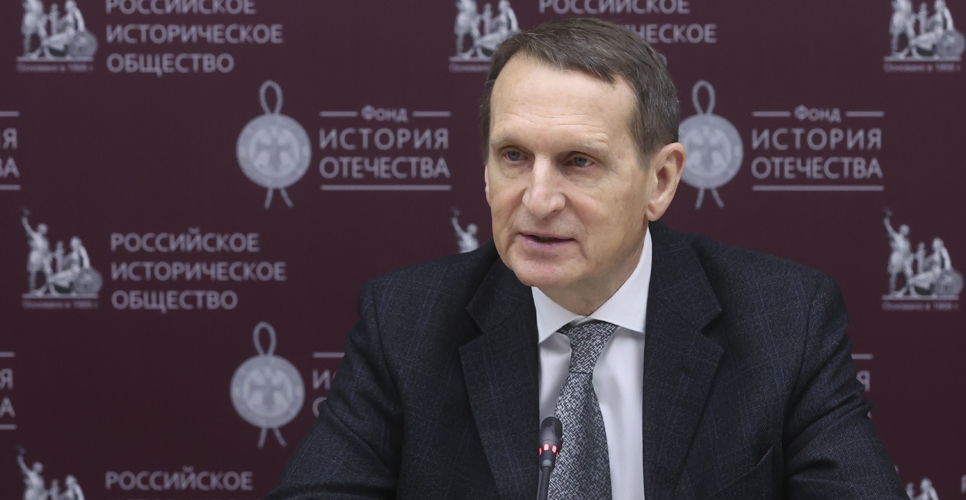
Good afternoon, dear colleagues!
Over the centuries, our country has been shaped as a multinational state, which has become a homeland for representatives of more than 190 ethnic groups and nationalities. It is no coincidence that the unity of the peoples of Russia has historically been one of our traditional spiritual and moral values. We understand this unity primarily as a sense of homeland, a sense of pride in our shared past and a willingness to build a shared future. It is largely due to this value foundation that our country has not only become one of the largest powers in human history, but has also maintained its status and withstood the most challenging historical trials.
At the end of last year, President of the Russian Federation Vladimir Vladimirovich Putin announced 2026 as the Year of the Unity of the Peoples of Russia by his Decree. The Government is currently forming an appropriate organizational committee, and I am confident that the members of the Russian Historical Society – our scientific organizations, universities, museums, archives, and libraries – will actively participate in the development and implementation of its events plan. Today's roundtable will serve as a starting point for this work and initiate a serious discussion on the historical aspects of the unity of the peoples of Russia. This is crucial, because even if certain historical events have temporarily divided our people, their proper understanding and learning from them can, on the contrary, unite and strengthen Russian society.
The desire to achieve interethnic harmony can be traced back to the time of ancient Rus, when the Slavic, Finno-Ugric, and Baltic tribes that inhabited the vast expanses of Northern Eurasia began to establish a common state. By the end of the 16th century, with the annexation of the Kazan, Astrakhan, and Siberian Khanates, our country had become not only a multinational but also a multi-religious power. The gradual expansion of the Moscow state's borders was accompanied by the construction of new defensive lines, known as "zasechnye cherty," which encircled the country from the south and southeast. Over time, many of the nomadic tribes that sought to cross the "zasechnye cherty" became defenders of the Russian borderlands, contributing to the growth of garrisons and participating in economic and cultural activities.
By voluntarily joining Russia, small nations not only ensured their own security, but also gained a unique opportunity to enter the historical arena and make their mark for the first time. The Tatars, Bashkirs, Caucasians, and many other famous noble families are just a few examples. Peter the Great, the first Emperor of Russia, famously said, "A Russian is someone who loves and serves Russia." This statement encapsulates Russia's history of defending its freedom with arms. In the ranks of the Second Militia, which drove the Polish invaders out of the Kremlin, you can find not only Russians, but also Tatars, Mari, and representatives of many other nationalities who united to protect their common homeland.
200 years later, in 1812, when French invaders invaded our country, several Bashkir and Tatar regiments fought against them. The folk song "Lyubizar," which tells the story of their courage, is now part of our shared historical and literary heritage, along with Mikhail Lermontov's poem "Borodino."
The legendary "Wild Division," which included both Russian officers and Caucasian highlanders, earned its fame on the frontlines of World War I. There are countless examples of interethnic camaraderie during the Great Patriotic War, when all the peoples of the Soviet Union rose up to fight the enemy. It is worth noting that the defenders of the legendary Pavlov House in Stalingrad included representatives of over 10 different nationalities. In a sense, it is symbolic that the greatest military victory in the history of our people, and in the history of humanity, was achieved against the proponents of the ideas of "racial purity" and "Aryan superiority."
I would like to add that the situation is similar in the area of the special military operation, where the Armed Forces of Russia, which include representatives of all ethnic groups in our country, are fighting ideological followers of the Nazis who share their criminal prejudices.
All of this once again demonstrates the relevance of the topic of our today's discussion. Examples of the interethnic unity of the peoples of Russia can be found in military history, the history of state building, and our cultural tradition. I hope that we will touch upon each of these topics today, and we will also discuss the prospects for the development of historical and ethnographic research and the training of specialized professionals.
Thank you for your attention!
Moscow, RIO House,
January 22, 2026
Over the centuries, our country has been shaped as a multinational state, which has become a homeland for representatives of more than 190 ethnic groups and nationalities. It is no coincidence that the unity of the peoples of Russia has historically been one of our traditional spiritual and moral values. We understand this unity primarily as a sense of homeland, a sense of pride in our shared past and a willingness to build a shared future. It is largely due to this value foundation that our country has not only become one of the largest powers in human history, but has also maintained its status and withstood the most challenging historical trials.
At the end of last year, President of the Russian Federation Vladimir Vladimirovich Putin announced 2026 as the Year of the Unity of the Peoples of Russia by his Decree. The Government is currently forming an appropriate organizational committee, and I am confident that the members of the Russian Historical Society – our scientific organizations, universities, museums, archives, and libraries – will actively participate in the development and implementation of its events plan. Today's roundtable will serve as a starting point for this work and initiate a serious discussion on the historical aspects of the unity of the peoples of Russia. This is crucial, because even if certain historical events have temporarily divided our people, their proper understanding and learning from them can, on the contrary, unite and strengthen Russian society.
The desire to achieve interethnic harmony can be traced back to the time of ancient Rus, when the Slavic, Finno-Ugric, and Baltic tribes that inhabited the vast expanses of Northern Eurasia began to establish a common state. By the end of the 16th century, with the annexation of the Kazan, Astrakhan, and Siberian Khanates, our country had become not only a multinational but also a multi-religious power. The gradual expansion of the Moscow state's borders was accompanied by the construction of new defensive lines, known as "zasechnye cherty," which encircled the country from the south and southeast. Over time, many of the nomadic tribes that sought to cross the "zasechnye cherty" became defenders of the Russian borderlands, contributing to the growth of garrisons and participating in economic and cultural activities.
By voluntarily joining Russia, small nations not only ensured their own security, but also gained a unique opportunity to enter the historical arena and make their mark for the first time. The Tatars, Bashkirs, Caucasians, and many other famous noble families are just a few examples. Peter the Great, the first Emperor of Russia, famously said, "A Russian is someone who loves and serves Russia." This statement encapsulates Russia's history of defending its freedom with arms. In the ranks of the Second Militia, which drove the Polish invaders out of the Kremlin, you can find not only Russians, but also Tatars, Mari, and representatives of many other nationalities who united to protect their common homeland.
200 years later, in 1812, when French invaders invaded our country, several Bashkir and Tatar regiments fought against them. The folk song "Lyubizar," which tells the story of their courage, is now part of our shared historical and literary heritage, along with Mikhail Lermontov's poem "Borodino."
The legendary "Wild Division," which included both Russian officers and Caucasian highlanders, earned its fame on the frontlines of World War I. There are countless examples of interethnic camaraderie during the Great Patriotic War, when all the peoples of the Soviet Union rose up to fight the enemy. It is worth noting that the defenders of the legendary Pavlov House in Stalingrad included representatives of over 10 different nationalities. In a sense, it is symbolic that the greatest military victory in the history of our people, and in the history of humanity, was achieved against the proponents of the ideas of "racial purity" and "Aryan superiority."
I would like to add that the situation is similar in the area of the special military operation, where the Armed Forces of Russia, which include representatives of all ethnic groups in our country, are fighting ideological followers of the Nazis who share their criminal prejudices.
All of this once again demonstrates the relevance of the topic of our today's discussion. Examples of the interethnic unity of the peoples of Russia can be found in military history, the history of state building, and our cultural tradition. I hope that we will touch upon each of these topics today, and we will also discuss the prospects for the development of historical and ethnographic research and the training of specialized professionals.
Thank you for your attention!
Moscow, RIO House,
January 22, 2026