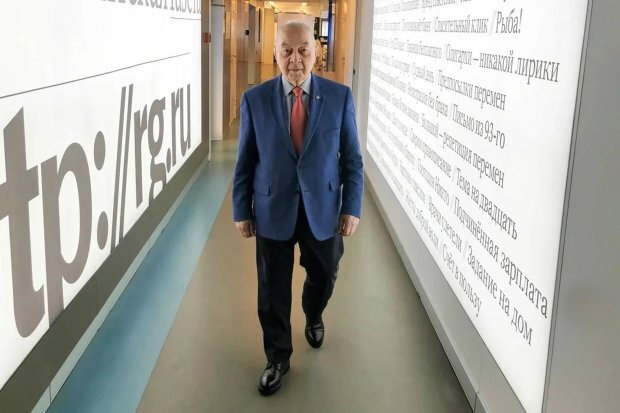
Doku Gapurovich, how would you describe the main goals and objectives of this still young public award?
Doku Zavgaev: The Leo Tolstoy International Peace Prize was recently established by the Russian Historical Society, the Russian Peace Foundation, and the Russian Military History Society in June 2022.
Speaking about this young project, which has already demonstrated its maturity, I would like to quote the words of Russian President Vladimir Putin, who, in his speech at the award ceremony in December 2025 in St. Petersburg, emphasized that "the recent initiative to establish the Leo Tolstoy Peace Prize has been highly acclaimed and has received significant public and international attention. It is designed to promote unity around the noble ideas of peacekeeping, strengthening friendship between nations, protecting human rights and freedoms, and creating a just multipolar world order based on the principles of sovereign equality and respect for each other's legitimate interests, as well as the supremacy of international law."
Created as a large-scale international project, the Prize is now step by step strengthening its authority and influence in the world, convincingly demonstrating both the relevance of the ideas underlying the founders and the avant-garde place of our country in defending peace on the planet. Thanks to its growing presence in the media space, the award is becoming increasingly recognizable - in 2025, almost a billion people from different parts of the world followed the awards ceremony.
Who has already been awarded the Prize?
Doku Zavgaev: Today, when conflicts are raging in numerous "hot spots" amidst acute international tensions, one of the Prize's crucial objectives is to draw the attention of the global community to the positive experiences of those who are achieving concrete results in peacekeeping and addressing significant international challenges. It is evident that the decisions made by the Peace Prize jury are significant and timely.
The first prize was awarded in 2024. The African Union, an influential intergovernmental organization that brings together more than 50 African states, was awarded the prize for its significant contribution to peacebuilding. The awarding of the Peace Prize was received by the African and international communities as a high assessment of the unbiased position taken by this major intergovernmental association on the most pressing issues of global politics, its peacekeeping initiatives based on respect for and implementation of the principles of the UN Charter, and its important role in resolving local and ethnic military conflicts on the continent. And, of course, as an additional incentive for the African Union to continue its active participation in deepening trust and cooperation among nations.
In 2025, three leaders of Central Asian states - President of Kyrgyzstan S.N. Japarov, President of Tajikistan E.Sh. Rahmon, and President of Uzbekistan Sh.M. Mirziyoyev - were awarded the International Peace Prize for their significant personal contributions to strengthening peace and security in the Central Asian region. Their signing of the Hodgent Declaration on Eternal Friendship and the Tripartite Treaty on the Point of State Border Crossing in March last year was an example of successfully building a modern model of interstate relations based on mutually beneficial, equal, and respectful dialogue.
It is significant that the leaders of the three Central Asian countries demonstrated foresight and considerable personal courage, as well as a politically mature and responsible approach to solving the most complex interstate problems, in order to overcome a decades-long conflict that had escalated to the point of using force. This marked the beginning of the final resolution of one of the most sensitive and historically complex issues arising from the disintegration of a large common state, and provided a new impetus for the restoration of friendly relations and the strengthening of good-neighborly relations in the regional and broader context.
The awarding of the prizes to the African Union and the presidents of the three Central Asian countries caused a great stir in the world and attracted additional attention to the noble ideals that underlie the new award established in Russia. This was undoubtedly due to the efforts of those who participated in the nomination process and the selection of the Prize winners.
Let me remind you that the decisions on awarding the Tolstoy Peace Prize are made by an authoritative international jury, which includes well-known public figures from eight countries located on different continents, who are members of such organizations as BRICS, the Shanghai Cooperation Organization, and the G20. The jury is headed by an outstanding representative of the global creative elite, the General Director of the Bolshoi and Mariinsky Theaters, the renowned Russian conductor Valery Gergiev. In both cases, the nominees for the Prize were submitted and convincingly justified by public organizations, both foreign and Russian.
This shows that there are forces in various regions of the world that are able to assess the current complex situation, as well as thoughtful and concerned individuals who are worried about the fate of the world and are willing to engage in difficult analytical work to respond to the agenda proposed by our project agenda.
In the information environment in which we live today, the growing interest in the Peace Prize from the media, journalists and bloggers from many countries plays a special role. Their objective reports on the award winners, on its huge potential for the future, undoubtedly contribute to expanding the circle of those who share the ideals of the Prize, contribute to the manifestation of initiative. This is evidenced by the numerous nominations for this award that continue to be submitted to the jury from various countries, including South Africa, Japan, India, Nigeria, Cameroon, Morocco, Norway, and others.
The international project implemented by the Peace Prize Foundation addresses the most pressing and widely discussed topics in various countries, including the prevention of history being rewritten.
Doku Zavgaev: You are right. The growing crisis in the world, which we are witnessing, requires the unification of all sensible forces on Earth. It requires their joint efforts to prevent our planet from being plunged into a war that could lead to the destruction of civilization.
To strengthen peace today, it is extremely important to preserve historical memory. Today, in some countries, especially in Europe, there are forces in power that have completely forgotten the tragic experiences of their ancestors and ignore the historical lessons of the past. They have deliberately falsified history as part of their destructive strategies aimed at manipulating public opinion. This is why there are attempts to question the decisive contribution of the Soviet Union to the liberation of Europe from fascism, to silence the immortal feat of the generation of victors, and ultimately to try to justify the crimes of the Nazis and their accomplices, which resulted in the deaths of millions of people.
To achieve their nefarious goals, our opponents will stop at nothing: they are destroying monuments, rewriting textbooks, and persecuting their own citizens for their desire to pay tribute to those who saved humanity from the Nazi beast over 80 years ago. I believe that such actions require a serious response. In some countries, monuments to our soldiers-liberators are not just being demolished. They are being destroyed in a blatant and barbaric manner, using sledgehammers, explosives, and bulldozers. This is not hooliganism or misconception, but a new and very dangerous form of rewriting history that is being introduced today, which does not require any mental effort or reading of books or textbooks from those it is directed at. It is aimed at inciting hatred and dehumanizing those who disagree, essentially creating a new form of the misanthropic ideology that is familiar to anyone who has studied the history of the 20th century. We must not forget that such actions have had and still can have a strong negative impact on people, especially young people who do not yet have a well-formed worldview based on the centuries-old moral values that are traditional for our country and many other cultures.
The future grows out of the past. In order to preserve peace today, we must not allow the lessons of history to be forgotten. Such as the failure of Napoleon's plans to become the ruler of the world, the consequences of the Battle of Borodino, or the Battle of the Nations at Leipzig. Such as the collapse of Nazism and Hitler's plans to conquer and enslave the peoples of our country, as well as other nations and territories. These are integral parts of the heroic past of our multi-ethnic and multi-religious nation (which is particularly important to emphasize in 2026, the Year of Unity of the Peoples of Russia). These lessons demonstrate the inevitability of the collapse of ideas of world domination, no matter which "hegemon" they come from, as repeatedly proven by many generations of our glorious ancestors.
What do you see as the reserves for increasing the effectiveness of the Peace Prize and involving its supporters in practical activities?
Doku Zavgaev: Today, we live in an extremely unstable world that is filled with deadly weapons capable of destroying civilization many times over. It is the responsibility of government agencies to address the complex challenges of curbing negative processes that threaten the very existence of humanity and to develop plans for the further development and prosperity of their countries and peoples. At the same time, effective assistance from the broad international community can play a significant role in achieving success in such a challenging endeavor. The Leo Tolstoy Peace Prize aims to promote the consolidation of such efforts in order to achieve practical goals in preserving peace on Earth.
I believe that it is necessary to use the enormous potential of literature and art for this purpose. Based on my numerous meetings and conversations with public opinion leaders, as well as my familiarity with the publications of a number of prominent experts who are professionally engaged in addressing issues related to preventing nuclear disasters, upholding historical truth, and shaping a more just world order, I would like to say that this issue is beginning to take its rightful place in the intellectual life of modern society. It has become one of the leitmotifs of reflection and public discussion among political experts, writers, journalists, theater and film professionals, and clergymen from traditional religious denominations, all of whom are dedicated to finding answers to the most pressing issues of our time.
I believe that it would be desirable for these vital issues to be included in the curricula of schools, universities, and other educational institutions. After all, this is one of the key elements in shaping the worldview of our fellow citizens, especially the younger generation.
With this in mind, the L.N. Tolstoy International Peace Prize Foundation is systematically working to expand the circle of our active supporters and partners. We are creating an institution of Ambassadors of the Foundation, which will include Russian and foreign public figures who have high authority in their respective fields and make a real contribution to strengthening peace and mutual understanding between nations. We would like to see more writers, publicists, filmmakers, religious leaders, and other prominent intellectuals among the supporters of the Peace Prize.
We are establishing cooperation and counting on the boundless creative potential of the Russian regions, our compatriots abroad, representatives of science, culture, and the arts, the media, and the business world - all those who, through their artistic ideas and analytical research, well-reasoned proposals for candidates for the Prize, and objective reporting on events in various parts of the world, contribute to the realization of the Prize's aspirations in order to achieve our common goal of preserving peace and life on Earth.
Doku Zavgaev: The Leo Tolstoy International Peace Prize was recently established by the Russian Historical Society, the Russian Peace Foundation, and the Russian Military History Society in June 2022.
Speaking about this young project, which has already demonstrated its maturity, I would like to quote the words of Russian President Vladimir Putin, who, in his speech at the award ceremony in December 2025 in St. Petersburg, emphasized that "the recent initiative to establish the Leo Tolstoy Peace Prize has been highly acclaimed and has received significant public and international attention. It is designed to promote unity around the noble ideas of peacekeeping, strengthening friendship between nations, protecting human rights and freedoms, and creating a just multipolar world order based on the principles of sovereign equality and respect for each other's legitimate interests, as well as the supremacy of international law."
Created as a large-scale international project, the Prize is now step by step strengthening its authority and influence in the world, convincingly demonstrating both the relevance of the ideas underlying the founders and the avant-garde place of our country in defending peace on the planet. Thanks to its growing presence in the media space, the award is becoming increasingly recognizable - in 2025, almost a billion people from different parts of the world followed the awards ceremony.
Who has already been awarded the Prize?
Doku Zavgaev: Today, when conflicts are raging in numerous "hot spots" amidst acute international tensions, one of the Prize's crucial objectives is to draw the attention of the global community to the positive experiences of those who are achieving concrete results in peacekeeping and addressing significant international challenges. It is evident that the decisions made by the Peace Prize jury are significant and timely.
The first prize was awarded in 2024. The African Union, an influential intergovernmental organization that brings together more than 50 African states, was awarded the prize for its significant contribution to peacebuilding. The awarding of the Peace Prize was received by the African and international communities as a high assessment of the unbiased position taken by this major intergovernmental association on the most pressing issues of global politics, its peacekeeping initiatives based on respect for and implementation of the principles of the UN Charter, and its important role in resolving local and ethnic military conflicts on the continent. And, of course, as an additional incentive for the African Union to continue its active participation in deepening trust and cooperation among nations.
In 2025, three leaders of Central Asian states - President of Kyrgyzstan S.N. Japarov, President of Tajikistan E.Sh. Rahmon, and President of Uzbekistan Sh.M. Mirziyoyev - were awarded the International Peace Prize for their significant personal contributions to strengthening peace and security in the Central Asian region. Their signing of the Hodgent Declaration on Eternal Friendship and the Tripartite Treaty on the Point of State Border Crossing in March last year was an example of successfully building a modern model of interstate relations based on mutually beneficial, equal, and respectful dialogue.
It is significant that the leaders of the three Central Asian countries demonstrated foresight and considerable personal courage, as well as a politically mature and responsible approach to solving the most complex interstate problems, in order to overcome a decades-long conflict that had escalated to the point of using force. This marked the beginning of the final resolution of one of the most sensitive and historically complex issues arising from the disintegration of a large common state, and provided a new impetus for the restoration of friendly relations and the strengthening of good-neighborly relations in the regional and broader context.
The awarding of the prizes to the African Union and the presidents of the three Central Asian countries caused a great stir in the world and attracted additional attention to the noble ideals that underlie the new award established in Russia. This was undoubtedly due to the efforts of those who participated in the nomination process and the selection of the Prize winners.
Let me remind you that the decisions on awarding the Tolstoy Peace Prize are made by an authoritative international jury, which includes well-known public figures from eight countries located on different continents, who are members of such organizations as BRICS, the Shanghai Cooperation Organization, and the G20. The jury is headed by an outstanding representative of the global creative elite, the General Director of the Bolshoi and Mariinsky Theaters, the renowned Russian conductor Valery Gergiev. In both cases, the nominees for the Prize were submitted and convincingly justified by public organizations, both foreign and Russian.
This shows that there are forces in various regions of the world that are able to assess the current complex situation, as well as thoughtful and concerned individuals who are worried about the fate of the world and are willing to engage in difficult analytical work to respond to the agenda proposed by our project agenda.
In the information environment in which we live today, the growing interest in the Peace Prize from the media, journalists and bloggers from many countries plays a special role. Their objective reports on the award winners, on its huge potential for the future, undoubtedly contribute to expanding the circle of those who share the ideals of the Prize, contribute to the manifestation of initiative. This is evidenced by the numerous nominations for this award that continue to be submitted to the jury from various countries, including South Africa, Japan, India, Nigeria, Cameroon, Morocco, Norway, and others.
The international project implemented by the Peace Prize Foundation addresses the most pressing and widely discussed topics in various countries, including the prevention of history being rewritten.
Doku Zavgaev: You are right. The growing crisis in the world, which we are witnessing, requires the unification of all sensible forces on Earth. It requires their joint efforts to prevent our planet from being plunged into a war that could lead to the destruction of civilization.
To strengthen peace today, it is extremely important to preserve historical memory. Today, in some countries, especially in Europe, there are forces in power that have completely forgotten the tragic experiences of their ancestors and ignore the historical lessons of the past. They have deliberately falsified history as part of their destructive strategies aimed at manipulating public opinion. This is why there are attempts to question the decisive contribution of the Soviet Union to the liberation of Europe from fascism, to silence the immortal feat of the generation of victors, and ultimately to try to justify the crimes of the Nazis and their accomplices, which resulted in the deaths of millions of people.
To achieve their nefarious goals, our opponents will stop at nothing: they are destroying monuments, rewriting textbooks, and persecuting their own citizens for their desire to pay tribute to those who saved humanity from the Nazi beast over 80 years ago. I believe that such actions require a serious response. In some countries, monuments to our soldiers-liberators are not just being demolished. They are being destroyed in a blatant and barbaric manner, using sledgehammers, explosives, and bulldozers. This is not hooliganism or misconception, but a new and very dangerous form of rewriting history that is being introduced today, which does not require any mental effort or reading of books or textbooks from those it is directed at. It is aimed at inciting hatred and dehumanizing those who disagree, essentially creating a new form of the misanthropic ideology that is familiar to anyone who has studied the history of the 20th century. We must not forget that such actions have had and still can have a strong negative impact on people, especially young people who do not yet have a well-formed worldview based on the centuries-old moral values that are traditional for our country and many other cultures.
The future grows out of the past. In order to preserve peace today, we must not allow the lessons of history to be forgotten. Such as the failure of Napoleon's plans to become the ruler of the world, the consequences of the Battle of Borodino, or the Battle of the Nations at Leipzig. Such as the collapse of Nazism and Hitler's plans to conquer and enslave the peoples of our country, as well as other nations and territories. These are integral parts of the heroic past of our multi-ethnic and multi-religious nation (which is particularly important to emphasize in 2026, the Year of Unity of the Peoples of Russia). These lessons demonstrate the inevitability of the collapse of ideas of world domination, no matter which "hegemon" they come from, as repeatedly proven by many generations of our glorious ancestors.
What do you see as the reserves for increasing the effectiveness of the Peace Prize and involving its supporters in practical activities?
Doku Zavgaev: Today, we live in an extremely unstable world that is filled with deadly weapons capable of destroying civilization many times over. It is the responsibility of government agencies to address the complex challenges of curbing negative processes that threaten the very existence of humanity and to develop plans for the further development and prosperity of their countries and peoples. At the same time, effective assistance from the broad international community can play a significant role in achieving success in such a challenging endeavor. The Leo Tolstoy Peace Prize aims to promote the consolidation of such efforts in order to achieve practical goals in preserving peace on Earth.
I believe that it is necessary to use the enormous potential of literature and art for this purpose. Based on my numerous meetings and conversations with public opinion leaders, as well as my familiarity with the publications of a number of prominent experts who are professionally engaged in addressing issues related to preventing nuclear disasters, upholding historical truth, and shaping a more just world order, I would like to say that this issue is beginning to take its rightful place in the intellectual life of modern society. It has become one of the leitmotifs of reflection and public discussion among political experts, writers, journalists, theater and film professionals, and clergymen from traditional religious denominations, all of whom are dedicated to finding answers to the most pressing issues of our time.
I believe that it would be desirable for these vital issues to be included in the curricula of schools, universities, and other educational institutions. After all, this is one of the key elements in shaping the worldview of our fellow citizens, especially the younger generation.
With this in mind, the L.N. Tolstoy International Peace Prize Foundation is systematically working to expand the circle of our active supporters and partners. We are creating an institution of Ambassadors of the Foundation, which will include Russian and foreign public figures who have high authority in their respective fields and make a real contribution to strengthening peace and mutual understanding between nations. We would like to see more writers, publicists, filmmakers, religious leaders, and other prominent intellectuals among the supporters of the Peace Prize.
We are establishing cooperation and counting on the boundless creative potential of the Russian regions, our compatriots abroad, representatives of science, culture, and the arts, the media, and the business world - all those who, through their artistic ideas and analytical research, well-reasoned proposals for candidates for the Prize, and objective reporting on events in various parts of the world, contribute to the realization of the Prize's aspirations in order to achieve our common goal of preserving peace and life on Earth.