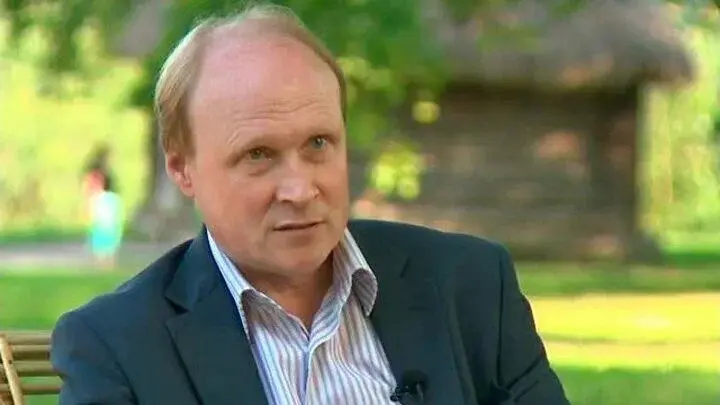
In mid-October, the summit of the CIS heads of state ended in Dushanbe. It was attended by the presidents of Tajikistan, Uzbekistan, and Kyrgyzstan, who were awarded the 2025 L.N. Tolstoy International Peace Prize. Vladimir Tolstoy, the writer's great-grandson, believes that this prize can replace the Nobel Prize. In an exclusive interview with Izvestia, he shared his thoughts.
— In a sense, the Leo Tolstoy International Peace Prize is in a polemic with the Nobel Prize. How do they differ conceptually?
— It was not intended as an alternative to the Nobel Prize. In recent years, major Western awards, such as the Nobel Prize and the Academy Awards, have become increasingly politicized and do not always accurately reflect the events taking place in the fields of cinema, literature, and global politics. Therefore, Russia is offering a more objective perspective. Perhaps, as the world finds its balance, a single award will suffice. And perhaps it will be the Leo Tolstoy Prize.
— This year's laureates were three politicians — the leaders of Tajikistan, Kyrgyzstan, and Uzbekistan.
— In my opinion, this is the right and understandable decision, because today there are several hotspots in the world where global geopolitical issues are being resolved. These include the Middle East, the Balkans, and the Central Asian republics, which are very important as a springboard for peace throughout Greater Eurasia. I am confident that we are not overestimating the contributions of the three leaders of the most important Central Asian countries of the former Soviet Union.
— Can an ordinary person from the people become a laureate?
— I think that anything is possible, but his activity or deed must be substantiated and understandable to all people. I have just returned from Kyrgyzstan, where we opened the exhibition “Leo Tolstoy and Chingiz Aitmatov. Dialogue through a Century.” It is interesting that Aitmatov was born exactly 100 years after Tolstoy. The similarities between their works, thoughts, and social activities are very interesting.
Almost 40 years ago, in 1986, he organized a famous forum on the shores of Lake Issyk-Kul, which was attended by leading intellectuals and heads of state. At that time, Chingiz Aitmatov was at the center of this peacekeeping process, which is still relevant today. A person of his stature could have been awarded the individual Leo Tolstoy Prize.
— Will there be a grand presentation this year?
— There is a delicate issue related to the status of the laureates themselves. Agreements must be reached at the highest, governmental level. As a rule, our president receives heads of state. It would be logical to assume that the presentation of the awards will be timed to coincide with a pre-approved meeting. Last year, the ceremony was tied to Tolstoy's birthday. There is no information available for this year, but it is possible that it will take place at the end of the year.
— In a sense, the Leo Tolstoy International Peace Prize is in a polemic with the Nobel Prize. How do they differ conceptually?
— It was not intended as an alternative to the Nobel Prize. In recent years, major Western awards, such as the Nobel Prize and the Academy Awards, have become increasingly politicized and do not always accurately reflect the events taking place in the fields of cinema, literature, and global politics. Therefore, Russia is offering a more objective perspective. Perhaps, as the world finds its balance, a single award will suffice. And perhaps it will be the Leo Tolstoy Prize.
— This year's laureates were three politicians — the leaders of Tajikistan, Kyrgyzstan, and Uzbekistan.
— In my opinion, this is the right and understandable decision, because today there are several hotspots in the world where global geopolitical issues are being resolved. These include the Middle East, the Balkans, and the Central Asian republics, which are very important as a springboard for peace throughout Greater Eurasia. I am confident that we are not overestimating the contributions of the three leaders of the most important Central Asian countries of the former Soviet Union.
— Can an ordinary person from the people become a laureate?
— I think that anything is possible, but his activity or deed must be substantiated and understandable to all people. I have just returned from Kyrgyzstan, where we opened the exhibition “Leo Tolstoy and Chingiz Aitmatov. Dialogue through a Century.” It is interesting that Aitmatov was born exactly 100 years after Tolstoy. The similarities between their works, thoughts, and social activities are very interesting.
Almost 40 years ago, in 1986, he organized a famous forum on the shores of Lake Issyk-Kul, which was attended by leading intellectuals and heads of state. At that time, Chingiz Aitmatov was at the center of this peacekeeping process, which is still relevant today. A person of his stature could have been awarded the individual Leo Tolstoy Prize.
— Will there be a grand presentation this year?
— There is a delicate issue related to the status of the laureates themselves. Agreements must be reached at the highest, governmental level. As a rule, our president receives heads of state. It would be logical to assume that the presentation of the awards will be timed to coincide with a pre-approved meeting. Last year, the ceremony was tied to Tolstoy's birthday. There is no information available for this year, but it is possible that it will take place at the end of the year.