Dear Valery Nikolaevich! Dear colleagues!
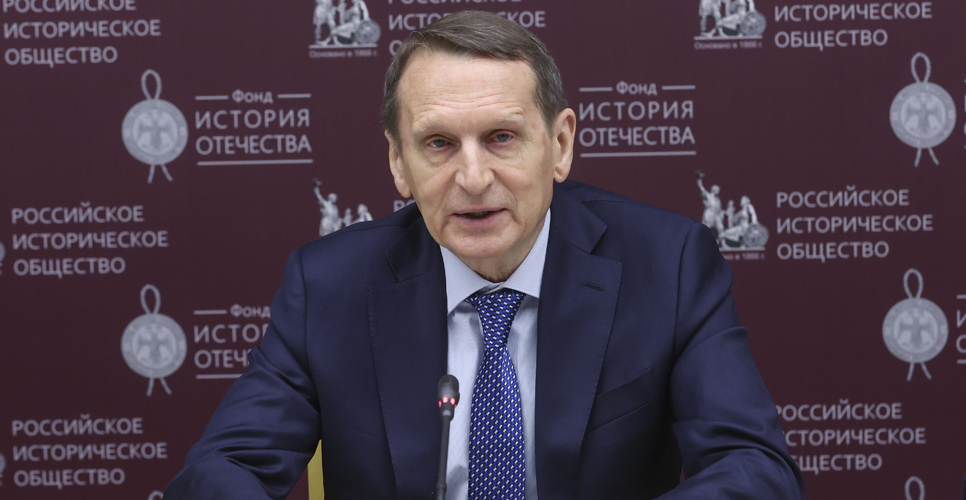
Today, we are holding a joint meeting of the Board of the History of the Fatherland Foundation and the Board of Trustees. As you may remember, the Foundation celebrated its 10th anniversary on April 6. The decree establishing the Foundation was signed by President Vladimir Vladimirovich Putin in 2016. Time has proven that this decision was well-founded. The History of the Fatherland Foundation has become a key tool for supporting historical and educational projects, gaining widespread recognition and credibility within the professional community. Over the past 10 years, the Foundation has supported more than 1,500 different historical initiatives. Many of these initiatives have had a lasting impact and have become part of a larger educational ecosystem. For example, films supported by the Foundation are regularly showcased at historical film festivals, which have been held in 14 cities. Additionally, new books are presented at the "History of the Fatherland" pavilion at the annual "Red Square" book festival.
The Foundation's anniversary coincides with the upcoming 160th anniversary of the Russian Historical Society. Although the RHS and the Foundation have different legal entities, their activities are partially interconnected and aimed at achieving a common goal of strengthening Russian historical culture. When determining the topics for its contests, the Foundation focuses on the priority areas of the Russian Historical Society. In turn, the evaluation of projects submitted to the contests by the regional branches of the RHS serves as an additional stage of expertise for the Foundation.
Last year, 180 historical and educational projects were implemented with the support of the History of the Fatherland Foundation. These include new historical books, exhibitions, international and national conferences, archaeological schools, online projects, and documentaries. Detailed information about these projects is provided in the report distributed to all participants of the meeting.
In addition, we need to summarize the results of five contests, which were held from January to March. This time, applicants for the fund's support were the first to submit their applications through the Electronic Budget portal, which I believe made the process even more convenient and transparent.
In total, 280 applications were submitted to the fund's experts, each of which underwent a two-stage selection process. I would like to take this opportunity to thank the chairpersons of the fund's expert boards for their work. The materials prepared by the experts have been distributed to the members of the fund's Board. Today, we have the opportunity to support approximately 100 applications.
In conclusion, I would like to mention that the History of the Fatherland Foundation is independently implementing a number of projects. For example, the Electronic Library of Historical Documents, which currently contains 435,000 digitized documents, has become a valuable resource for researchers. This portal has been visited over 27 million times, indicating its popularity.
The traveling exhibition "Strangers and Ourselves: Faces and Identities," created by the Foundation and the Russian Historical Society, is of great importance today. It has visited seven cities over the past year. The exhibition features captured exhibits from the special military operation zone, tells the stories of our soldiers and commanders, and demonstrates evidence of the war crimes committed by the Kiev regime's militants.
Many people are familiar with the International Prize for Teachers "History in School: Traditions and Innovations" organized by the Foundation, as well as the annual contests for local historians working with young people. I hope that in the future, the Foundation will continue to develop these and other areas of its activities in order to remain a reference point for all Russian historical and educational organizations.
The Foundation's work is an important part of the government's policy in the field of historical education. We plan to continue promoting high-quality historical knowledge at the government level, supporting our historians and science popularizers, and countering various types of falsification. We see this as an integral part of our efforts to protect national sovereignty.
Thank you very much!
Moscow, RIO House, April 28, 2026.
Today, we are holding a joint meeting of the Board of the History of the Fatherland Foundation and the Board of Trustees. As you may remember, the Foundation celebrated its 10th anniversary on April 6. The decree establishing the Foundation was signed by President Vladimir Vladimirovich Putin in 2016. Time has proven that this decision was well-founded. The History of the Fatherland Foundation has become a key tool for supporting historical and educational projects, gaining widespread recognition and credibility within the professional community. Over the past 10 years, the Foundation has supported more than 1,500 different historical initiatives. Many of these initiatives have had a lasting impact and have become part of a larger educational ecosystem. For example, films supported by the Foundation are regularly showcased at historical film festivals, which have been held in 14 cities. Additionally, new books are presented at the "History of the Fatherland" pavilion at the annual "Red Square" book festival.
The Foundation's anniversary coincides with the upcoming 160th anniversary of the Russian Historical Society. Although the RHS and the Foundation have different legal entities, their activities are partially interconnected and aimed at achieving a common goal of strengthening Russian historical culture. When determining the topics for its contests, the Foundation focuses on the priority areas of the Russian Historical Society. In turn, the evaluation of projects submitted to the contests by the regional branches of the RHS serves as an additional stage of expertise for the Foundation.
Last year, 180 historical and educational projects were implemented with the support of the History of the Fatherland Foundation. These include new historical books, exhibitions, international and national conferences, archaeological schools, online projects, and documentaries. Detailed information about these projects is provided in the report distributed to all participants of the meeting.
In addition, we need to summarize the results of five contests, which were held from January to March. This time, applicants for the fund's support were the first to submit their applications through the Electronic Budget portal, which I believe made the process even more convenient and transparent.
In total, 280 applications were submitted to the fund's experts, each of which underwent a two-stage selection process. I would like to take this opportunity to thank the chairpersons of the fund's expert boards for their work. The materials prepared by the experts have been distributed to the members of the fund's Board. Today, we have the opportunity to support approximately 100 applications.
In conclusion, I would like to mention that the History of the Fatherland Foundation is independently implementing a number of projects. For example, the Electronic Library of Historical Documents, which currently contains 435,000 digitized documents, has become a valuable resource for researchers. This portal has been visited over 27 million times, indicating its popularity.
The traveling exhibition "Strangers and Ourselves: Faces and Identities," created by the Foundation and the Russian Historical Society, is of great importance today. It has visited seven cities over the past year. The exhibition features captured exhibits from the special military operation zone, tells the stories of our soldiers and commanders, and demonstrates evidence of the war crimes committed by the Kiev regime's militants.
Many people are familiar with the International Prize for Teachers "History in School: Traditions and Innovations" organized by the Foundation, as well as the annual contests for local historians working with young people. I hope that in the future, the Foundation will continue to develop these and other areas of its activities in order to remain a reference point for all Russian historical and educational organizations.
The Foundation's work is an important part of the government's policy in the field of historical education. We plan to continue promoting high-quality historical knowledge at the government level, supporting our historians and science popularizers, and countering various types of falsification. We see this as an integral part of our efforts to protect national sovereignty.
Thank you very much!
Moscow, RIO House, April 28, 2026.